

 English
 Deutsch
 Español
 русский

Home · Nachrichten · Branchennachrichten · Geschirmtes oder ungeschirmtes Patchpanel – welches benötigen Sie?
Branchennachrichten
Geschirmtes oder ungeschirmtes Patchpanel – welches benötigen Sie?
2026-07-07Inhalt
- 1 Was die abgeschirmte von der ungeschirmten Konstruktion unterscheidet
- 2 Wenn Sie ein abgeschirmtes Patchpanel benötigen
- 3 Wenn ein ungeschirmtes Patchpanel die praktische Wahl ist
- 4 Direkter Vergleich
- 5 Produktpalette der geschirmten Patchpanels
- 6 Erdungsanforderungen für abgeschirmte Panels
- 7 Häufige Fehler bei der Auswahl eines Paneltyps
- 8 Häufig gestellte Fragen
Wählen Sie ein abgeschirmtes Patchpanel, wenn Ihre Verkabelung in der Nähe von Motoren, Leuchtstoffvorschaltgeräten, Aufzügen, Schweißgeräten, MRT-Räumen oder dichten Leitungen verläuft, die gemeinsam mit Stromleitungen genutzt werden. Wählen Sie ein ungeschirmtes Patchpanel für Standardbüros, Einzelhandelsflächen, Schulen und Wohnanlagen, bei denen elektromagnetische Störungen minimal sind. Die Entscheidung hängt von einer Frage ab: Wie viel elektrisches Rauschen befindet sich in der Nähe Ihres Kabelpfads? Wenn die Antwort „viel“ ist, schützt die Abschirmung die Signalintegrität; Wenn die Antwort sehr gering ist, liefert ungeschirmte Hardware die gleiche Datenleistung zu geringeren Kosten und mit einer einfacheren Installation.
Was die abgeschirmte von der ungeschirmten Konstruktion unterscheidet
Beide Panel-Typen schließen das gleiche Twisted-Pair-Kabel ab und unterstützen die gleichen Nennwerte, aber der physische Aufbau am Anschluss und auf der Rückseite des Panels unterscheidet sich.
Geschirmte (STP/FTP) Patchpanels
Ein abgeschirmtes Panel umhüllt jeden Port oder den gesamten Panelkörper mit einer Metallfolie oder einer Geflechtschicht, die mit der Erdung des Racks verbunden ist. Diese Abschirmung fängt elektromagnetische Störungen ab, bevor sie die Kupferpaare erreichen, wodurch verhindert wird, dass Übersprechen und externes Rauschen das Signal verfälschen. Abgeschirmte Panels erfordern einen kontinuierlichen Erdungspfad vom Panel zum Rackrahmen und schließlich zur Gebäudeerde, da sich eine nicht verbundene Abschirmung wie eine Antenne verhalten und Rauschen erzeugen kann, anstatt es zu blockieren.
Ungeschirmte (UTP) Patchpanels
Ein ungeschirmtes Panel ist ausschließlich auf die Verdrillungsrate der internen Paare angewiesen, um Störungen zu unterdrücken. Es ist keine Metallabschirmung und keine Erdung erforderlich, was die Installation beschleunigt und die Hardware selbst leichter und kostengünstiger macht. In einer rauscharmen Umgebung reicht die Twisted-Pair-Unterdrückung allein aus, um eine Cat6- oder Cat6A-Verbindung innerhalb ihrer Fehlerratenspezifikation zu halten.
Wenn Sie ein abgeschirmtes Patchpanel benötigen
Die Abschirmung zahlt sich aus, wenn sich die Installation in der Nähe einer ständigen Lärmquelle befindet. In der folgenden Tabelle sind häufige Szenarien aufgeführt, die aus realen Bereitstellungsumgebungen stammen.
| Industrieböden und Fabriken | Antriebe mit variabler Frequenz, Schweißgeräte und große Motoren erzeugen starke elektromagnetische Störungen, die ungeschirmte Kabel nicht unterdrücken können. |
| Rechenzentren mit hoher Portdichte | Gebündelte Kabel, die in gemeinsam genutzten Kabelkanälen verlaufen, erzeugen gegenseitiges Übersprechen; Die Abschirmung isoliert jede Verbindung. |
| Krankenhäuser und Bildgebungsräume | MRT- und Diagnosegeräte senden Störungen aus, die den sensiblen Netzwerkverkehr in der Nähe stören können. |
| Gebäude mit gemeinsamer Stromleitung | Alle Leitungen, die über mehrere Meter parallel zu elektrischen Leitungen verlegt werden, profitieren von einer Abschirmung. |
| 10GBASE-T-Bereitstellungen über Cat6A | Höhere Frequenzen bis zu 500 MHz reagieren empfindlicher auf Alien Crosstalk, daher sind abgeschirmte Cat6A-Panels in neuen 10-Gbit/s-Builds üblich. |
Wenn ein ungeschirmtes Patchpanel die praktische Wahl ist
In den meisten kommerziellen und privaten Netzwerken kommt es nie zu den oben beschriebenen Störungen. In einem Standardbüro, in dem Cat6 mit 1 Gbit/s oder sogar 10 Gbit/s innerhalb der Entfernungsgrenze von 37 bis 55 Metern betrieben wird, sind ungeschirmte Patchpanels hinsichtlich des Datendurchsatzes identisch mit geschirmten. Die Einsparungen ergeben sich aus drei Gründen: geringere Panelkosten, keine Erdungshardware oder Erdungsbänder und schnellere Terminierung, da Installateure nicht an jedem Port eine Abschirmungsverbindung verwalten müssen. Für Schulen, Einzelhandelsgeschäfte, kleine Büros und Heimnetzwerke ist ungeschirmt die standardmäßige und kostengünstige Option.
Direkter Vergleich
| Faktor | Geschirmtes Patchpanel | Ungeschirmtes Patchpanel |
| EMI-Ablehnung | Hoch, blockiert externes elektrisches Rauschen | Moderat, verlässt sich nur auf die Paarverdrehung |
| Erdung erforderlich | Ja, durchgehende Verbindung zur Rack-Erde | Nein |
| Installationszeit | Längere Erdungsband- und Verbindungsprüfungen erforderlich | Nur kürzer, Standard-Punch-Down |
| Relative Kosten | Höher, typischerweise 20 bis 40 Prozent mehr pro Port | Niedrigere Grundkosten |
| Beste Passform | Industriestandorte, Rechenzentren, 10GBASE-T läuft in der Nähe von EMI | Büros, Wohnungen, Schulen, kommerzielle Standardverkabelung |
Produktpalette der geschirmten Patchpanels
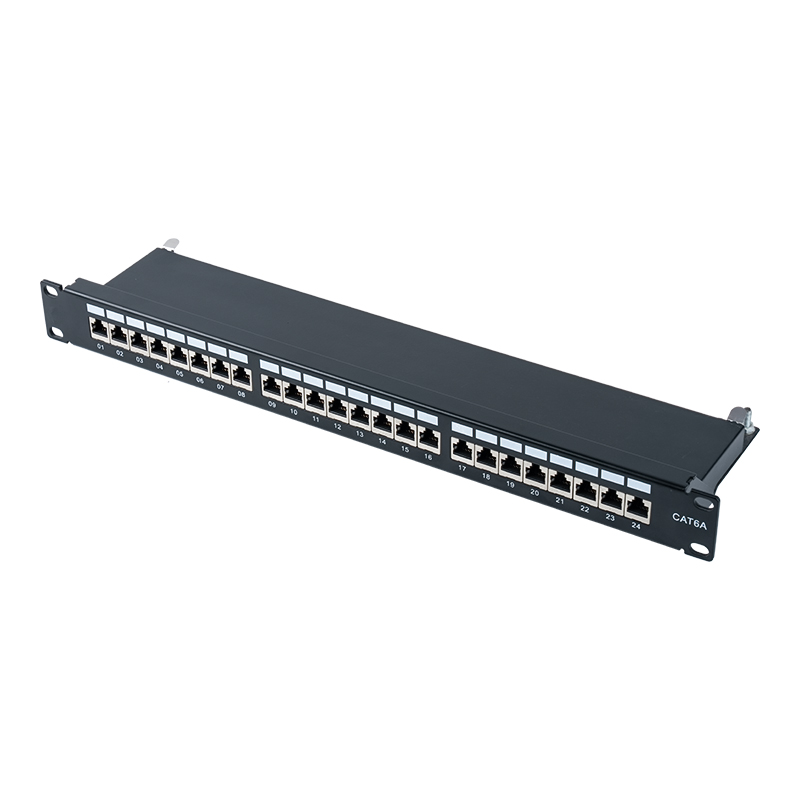
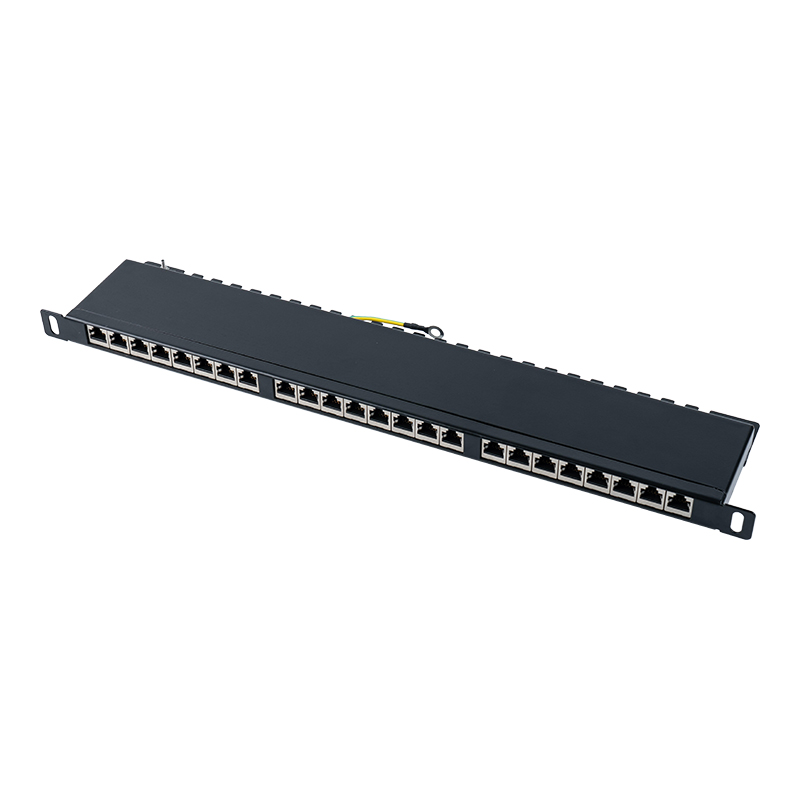
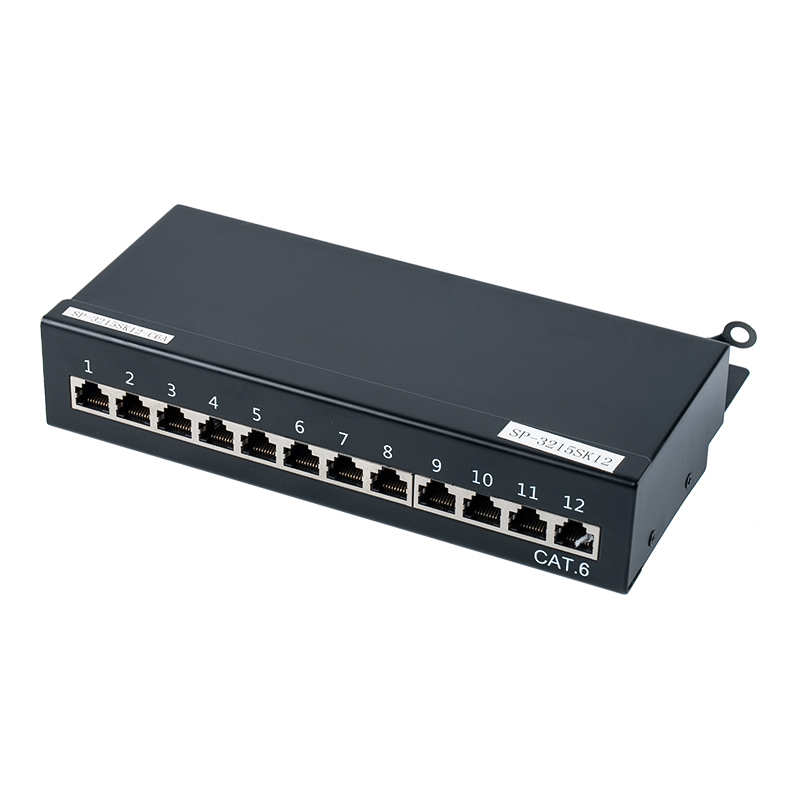
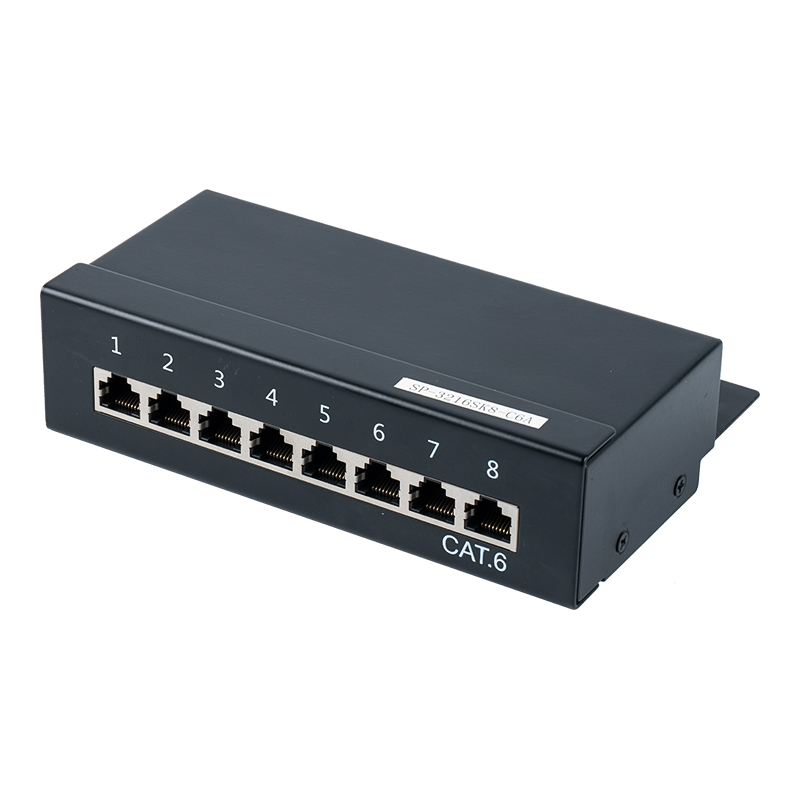
Nachfolgend finden Sie ein Beispiel für abgeschirmte Patchpanel-Formate, die für Kabel der Kategorie 6 und Cat6A hergestellt wurden und Portanzahlen von 8 bis 24 und Rackbreiten von 10 Zoll bis zu vollen 19 Zoll abdecken.
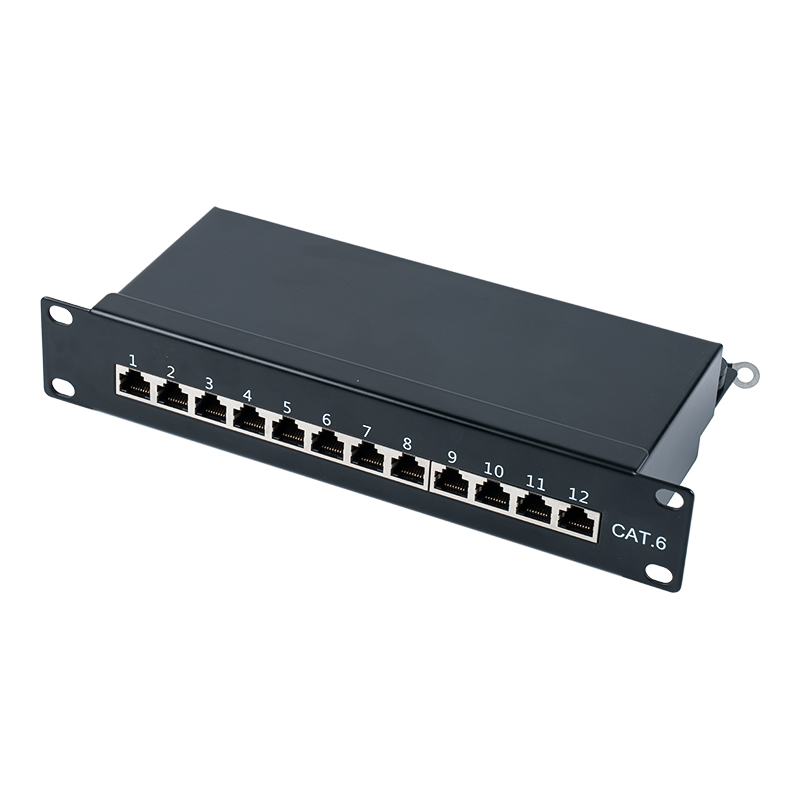
Erdungsanforderungen für abgeschirmte Panels
Ein abgeschirmtes Panel funktioniert nur dann ordnungsgemäß, wenn die Abschirmung einen niederohmigen Pfad zur Erde aufweist. Das Überspringen dieses Schritts ist der häufigste Installationsfehler und kann dazu führen, dass eine abgeschirmte Anlage schlechtere Leistung erbringt als eine ungeschirmte.
Verkleben des Racks
Der Rackrahmen selbst benötigt einen speziellen Erdungsleiter, der normalerweise 6 AWG oder größer ist und zur Haupterdungsschiene des Gebäudes führt.
Verkleben jedes Panels
Bei abgeschirmten Panels werden Erdungsösen, Schrauben oder geflochtene Bänder am Panel-Chassis verwendet. Jedes Panel im Rack sollte mit demselben Erdungspunkt verbunden sein, um Erdschleifen zwischen benachbarten Panels zu vermeiden.
Kontinuität prüfen
Nach der Installation sollte ein Durchgangstest zwischen der Panel-Abschirmung und der Gebäudeerde deutlich unter 1 Ohm liegen. Alles, was darüber liegt, deutet auf einen losen Kabelschuh oder eine fehlende Verbindungsbrücke hin.
Häufige Fehler bei der Auswahl eines Paneltyps
Bei Feldprüfungen tauchen immer wieder zwei Fehler auf. Die erste besteht darin, abgeschirmte Hardware ohne Erdung zu installieren, was zu höheren Kosten ohne zusätzlichen Schutz führt und zu Brummen oder Rauschen führen kann. Die zweite Möglichkeit besteht darin, ungeschirmte Panels in einem Strang zu verwenden, der sich eine Wanne mit einer dreiphasigen Stromleitung teilt, was zu zeitweiligen Paketverlusten führt, die im Nachhinein schwer zu diagnostizieren sind. Durch die Anpassung des Panels an die tatsächliche elektrische Umgebung, anstatt im gesamten Gebäude standardmäßig auf einen Typ zu setzen, werden beide Probleme vermieden.
Häufig gestellte Fragen
Verbessert ein abgeschirmtes Patchpanel die Geschwindigkeit?
Nein. Durch die Abschirmung wird die maximale Datenrate einer Kategoriebewertung nicht erhöht. Es reduziert die Fehlerrate in lauten Umgebungen, wodurch die Verbindung mit ihrer Nenngeschwindigkeit läuft, anstatt auf eine niedrigere ausgehandelte Geschwindigkeit abzufallen.
Können abgeschirmte und ungeschirmte Panels im selben Rack gemischt werden?
Ja, aber die abgeschirmten Ports müssen weiterhin geschirmte Patchkabel und durchgehende Keystone-Buchsen verwenden. Durch die Kombination eines abgeschirmten Panels mit ungeschirmten Kabeln wird der Abschirmungsvorteil für diese Verbindung zunichte gemacht.
Ist für Cat6A mit 10 Gbit/s eine abgeschirmte Verkabelung erforderlich?
Nicht unbedingt erforderlich, aber abgeschirmtes Cat6A ist in dichten Installationen üblich, da es Fremdübersprechen zwischen benachbarten gebündelten Kabeln reduziert, was bei 500 MHz ein größeres Problem darstellt.
Wie viel mehr kostet ein geschirmtes Patchpanel?
Bei abgeschirmten Panels beträgt die Leistung pro Port in der Regel 20 bis 40 Prozent mehr als bei ungeschirmten Pendants, was vor allem auf das metallische Abschirmmaterial und die Erdungshardware zurückzuführen ist, die im Panel enthalten sind.
Kontaktieren Sie uns
Ihre E-Mail-Adresse wird nicht veröffentlicht. Pflichtfelder sind markiert*
Kategorien
Produktkategorie

Kontaktieren Sie uns

-
 Nr. 588, Xiaolin Avenue, Stadtteil Xiaolin, Stadt Cixi, Provinz Zhejiang, China
-
 [email protected]
-
 +86-574-63507962
-
 +86-15988643730
Urheberrecht Ningbo Betterbell Telecommunication Equipment Co., Ltd. Alle Rechte vorbehalten. Hersteller von strukturierten Verkabelungslösungen Lieferant von Netzwerk-Verkabelungsprodukten
